The Trend Test: What Tesla’s Flying Roadster Revealed About Brands and Viral Moments
Tesla flipped a car in the air and every social team on earth got the same brief. Here is what worked, what did not, and a test for next time.
For a long time I was the person in the room saying no to trends. Someone would bring a meme into a Monday meeting, and I would ask what the brand had to do with it, and usually the answer was nothing beyond the fact that it was Monday and the meme was everywhere. My reasoning since 1998 has not really changed. A brand that borrows a joke it did not write is spending its credibility on someone else's idea, and the thing it gets back, a few thousand likes, tells you nothing about whether anyone thinks better of you afterward.
I have also come to think most of these posts start from one of two places, and neither is a good one. Either the team is chasing the hype, because the trend is big and being seen next to it feels like a win in itself, or the team is under pressure, from a manager, a client or the feed, to be there because everyone else already is. In an Adobe Express survey reported by eMarketer, 22 percent of marketers said they feel compelled to respond to viral moments daily or several times a week, and 40 percent said skipping a trend costs them engagement. That is pressure, and pressure produces posts that exist to prove the team was awake.
What has changed is that I have watched enough of these play out to admit that some of them work, and to get more specific about why. When a brand already owns a claim that the trend happens to illustrate, when the joke can be made in the brand's own voice, and when the team can get it out the door in a day without anyone having to apologize later, the trend is just a bigger audience for something the brand wanted to say anyway. Last week gave me the cleanest example I have seen of both the good version and the bad one, in the same 48 hours, on the same subject.
The catalyst
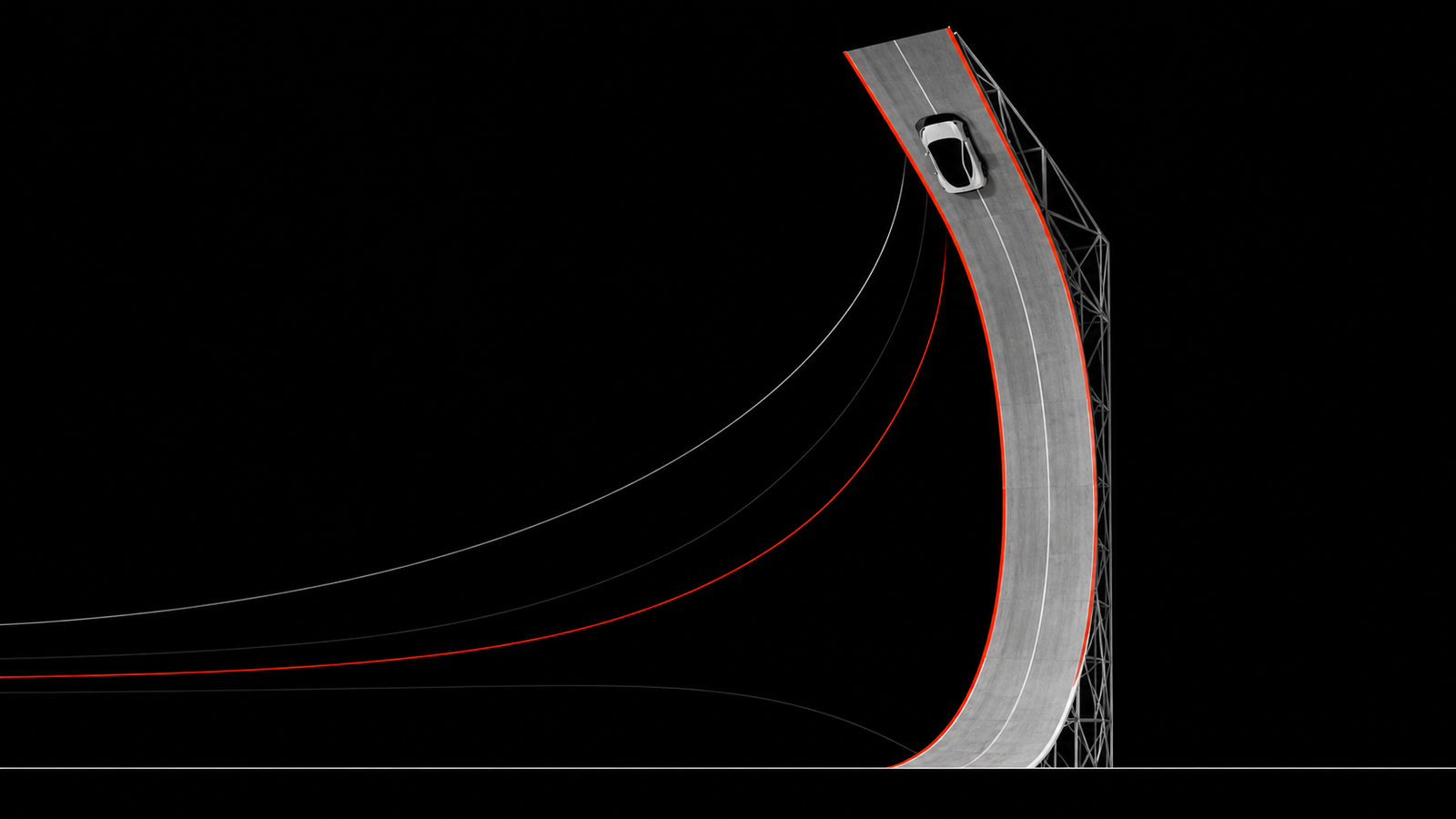
On the evening of Oct. 15, at a SpaceX test site in McGregor, Texas, Tesla showed a Roadster prototype driving up a ramp that curled over on itself, hanging upside down, firing thrusters built with SpaceX, rolling once in midair and landing in a cloud of white vapor. Elon Musk had been promising this car since 2017. In November 2025 he told Joe Rogan the demo would be "unforgettable" and more or less said the word flying. The night delivered on the theater and not much else: production is now slated for 2028, the flying features are not approved for any public road, the version that flies has had its passenger seat removed to fit 600 liters of compressed air, and Yann LeCun called the whole thing a marketing stunt within hours.
I mention all that because it is the first thing a brand should have registered before posting. This was not a meme that bubbled up from nowhere. It was another company's product launch, a very good one, and it is reaching this region through Tesla's own channels; reservations opened in the UAE on Oct. 20 at Dh210,000 for the base car. Every brand that joked about the Roadster gave Tesla one more appearance in the feed. The useful raw material, for everyone else, was the footage itself, a picture the whole world had seen and nobody needed explained.
Who did what with it
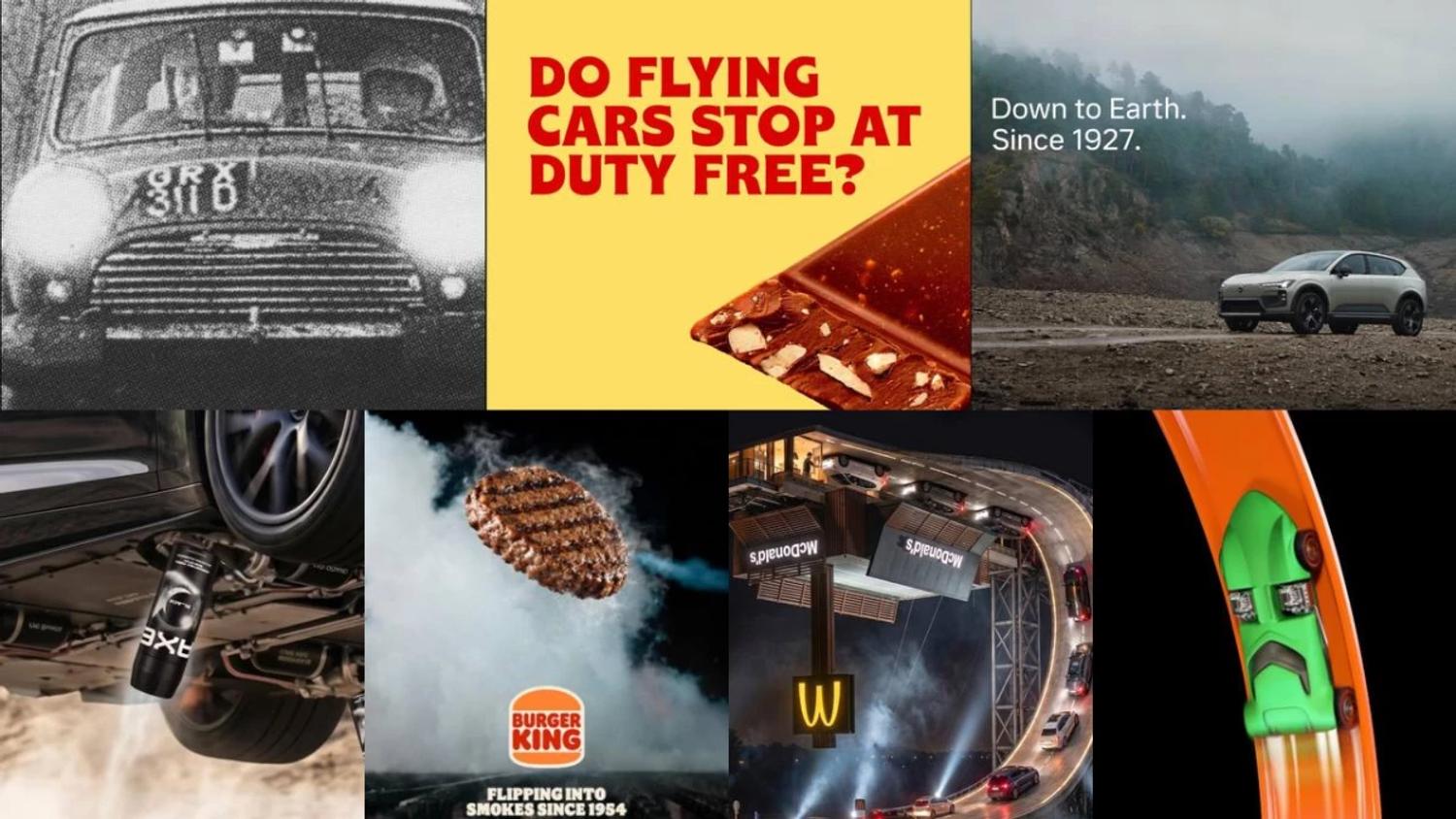
By the weekend, AXE had strapped deodorant cans under a car as thrusters, Toblerone had asked whether flying cars stop at duty free, Hot Wheels had pointed out that it has been doing this since 1968, and dozens of others had followed. Five of the posts stayed with me, and not all for good reasons.
McDonald's France went with a photo of a drive-thru built on a restaurant roof and three words: "on est prêts #tesla." L'Express Franchise counted about 314,000 views and 17,000 likes three days later. McDonald's Czech Republic did a related image, cars climbing a near-vertical road and pulling into the restaurant upside down, which DesignRush reports at more than 350,000 likes. I have not checked those counters myself, so take them as reported.
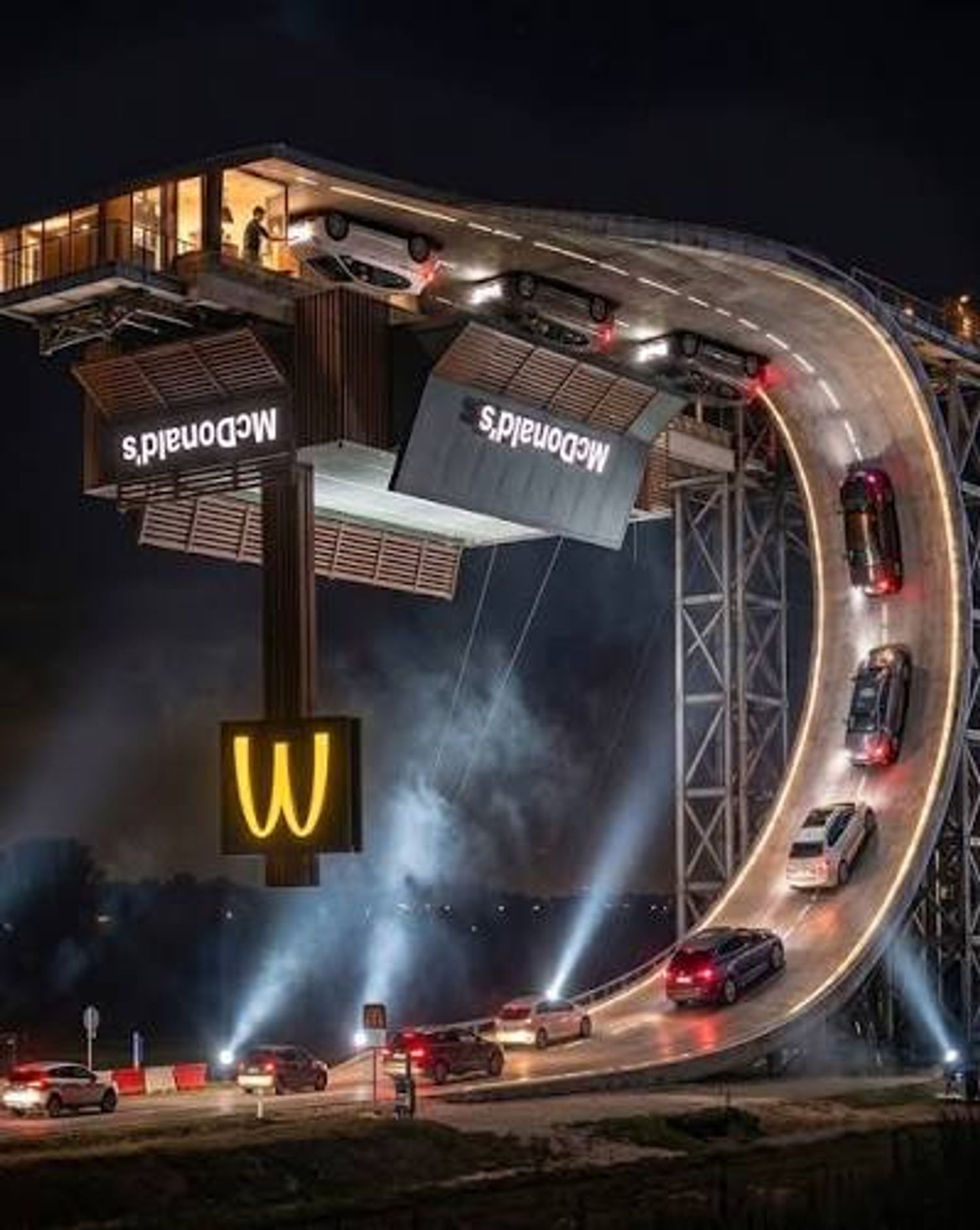
I liked these more than anything else that week, and the reason is simple. McDonald's sells through a window to people in cars. It built its whole service model around that lane, and in 2022 it opened a test restaurant in Fort Worth designed almost entirely for drive-thru and digital orders, with a conveyor belt feeding food out to cars. So when a car flies, McDonald's actually has a question to answer, and somebody on its operations side would have asked it in earnest. The joke is an extension of something the company is already spending money on, which is why it will still make sense long after the Tesla clip has gone.
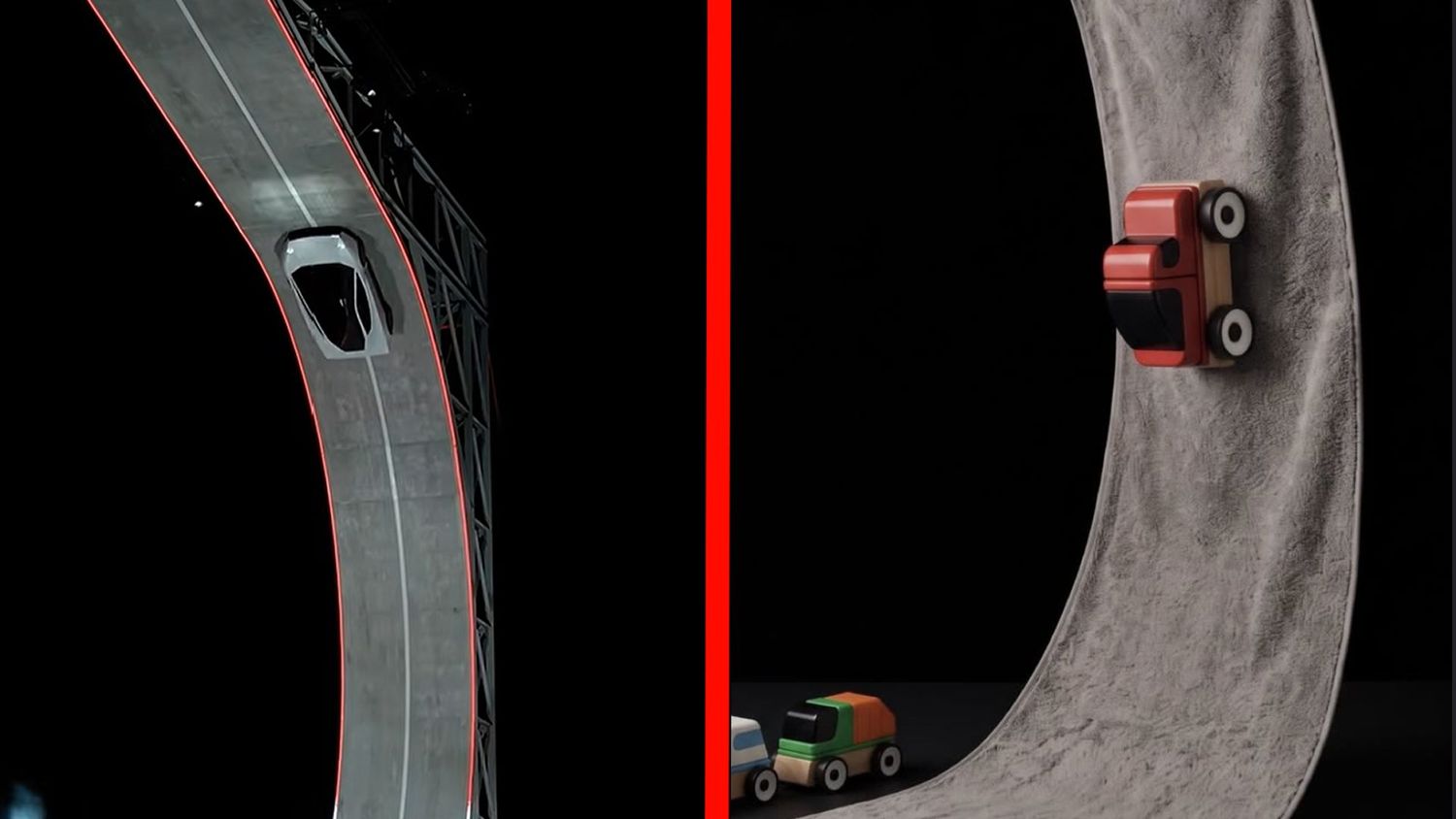
IKEA Taiwan took a different route the same day. It rebuilt Tesla's ramp on a wooden floor using a BROKGLIM bath towel for the road and LILLABO toy cars for the action, borrowed Tesla's own caption, "Real life, baby," and added two words of its own: "Safe, affordable." I think this is the smartest piece of the lot, and Open Magazine made the point better than I can: take the products out and there is no joke left, because the towel is the road and the toy cars are the stunt. There is also a view in it. IKEA is not admiring the fantasy. It is offering a family a cheaper afternoon.
I would stop short of calling it a model, though. The post only lands if you saw Tesla's caption, so it lives exactly as long as the Tesla clip does. It is a dig at a car company from a furniture company, which is funny once. And it came out of one country market with, as far as I could find, no published engagement figures of its own, only a wave of trade coverage, which is a different thing from reach. A strong idea, narrowly useful. Nobody buys a towel because of it, and nobody was meant to.
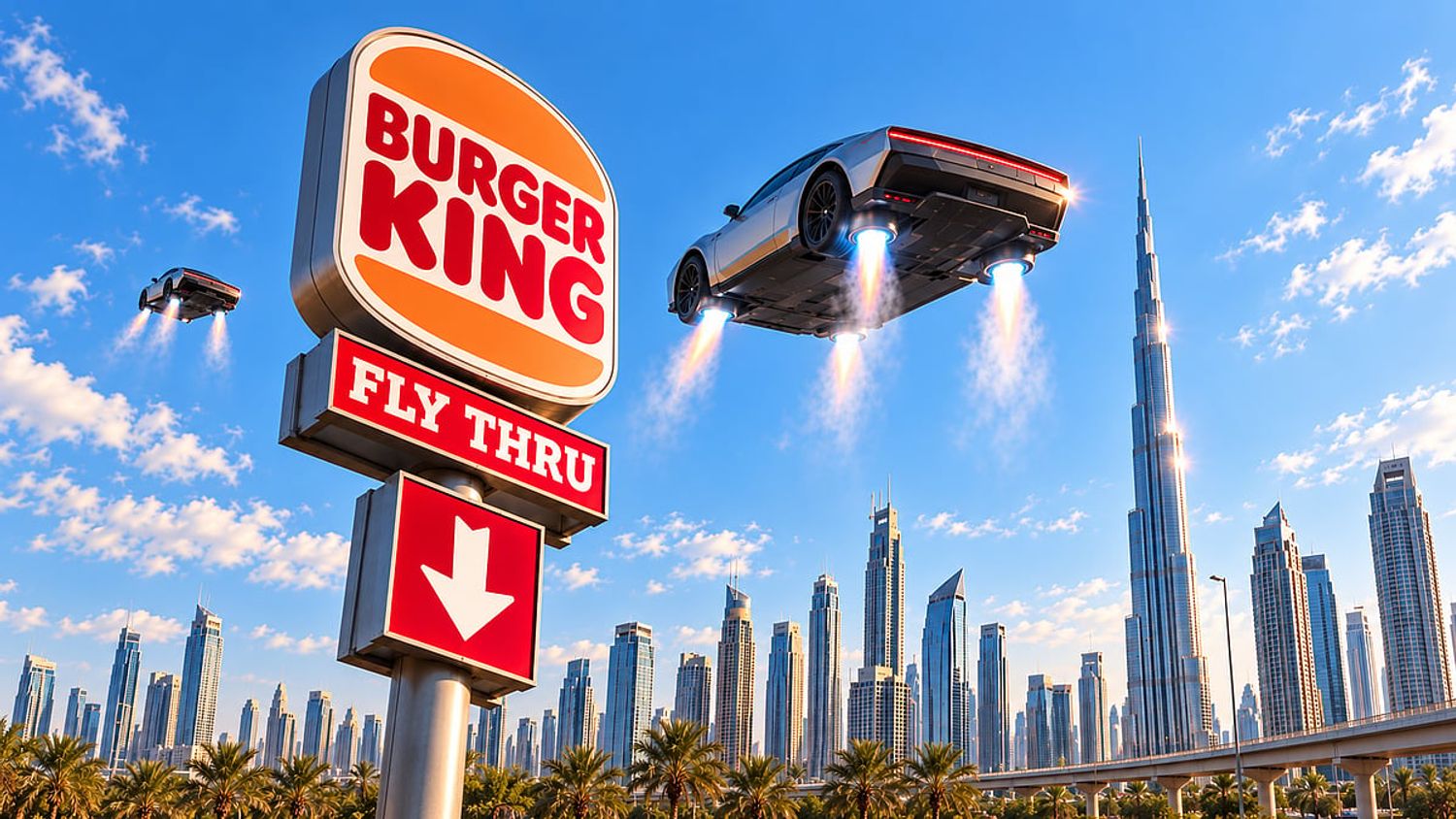
Burger King is the interesting case because two markets answered the same brief and got different results. Burger King Greece, with McCann, swapped the car for a burger mid-flip over a smoking grill and wrote "Flipping into smokes since 1954." That line belongs to Burger King and nobody else, the smoke rhymes with the Roadster's landing, and the burger is the hero. Burger King UAE posted a "Fly Thru" sign with cars in the air and the Burj Khalifa behind it, tagged Tesla and wrote "Maybe it's time…" It is perfectly competent, and any drive-thru chain could have posted it, and McDonald's had already posted a better version of the same thought that morning. Neither is a failure. One of them will be forgotten the moment the clip leaves the feed, and that is what usually happens when a brand participates without bringing anything of its own.
Then there was Naukri, the Indian job portal, which put Tesla's looping ramp behind the line "If cars can fly, imagine where your ambition can take you." It is a handsome image and a harmless sentiment, and that is exactly what is wrong with it. Nothing in the frame belongs to Naukri. The ramp is Tesla's, the cars are Tesla's, and "ambition" is a word any recruiter, bank, airline or business school could have dropped into the same spot the same afternoon. Swap the logo and the post is unchanged. This is the version of trend chasing I spent years arguing against, and I have not changed my mind about it.
And Volvo did the thing I would have done. It posted a car sitting on the road and wrote "Down to Earth. Since 1927." Nearly a century of selling safety lets Volvo treat staying put as a statement rather than an absence. Declining a trend in public is a real option when your promise gives people a reason to read the refusal as confidence.
What happened over MENA
Within a day or two, brands across the GCC and the wider MENA market had their Roadster posts out. Burger King UAE's Fly Thru was one. Lulu Hypermarket tied the car to its 10,000 trolleys promotion. After that came a run of retailers, delivery apps, banks and telcos whose names I will leave out, because the posts were interchangeable with each other and with Naukri's: the ramp, a local skyline, a line about reaching new heights, a logo. Aletihad reported that ordinary UAE users were folding the trend into jokes about how quickly the traffic police would have something to say about a flying car, and that was livelier than most of what the brands managed.
Speed was not the issue. Generative AI has turned a convincing upside-down highway with your logo on it into a 20-minute job, and the regional teams proved it. What the tools could not supply is the part that made the McDonald's post work, a claim the brand already owns that the trend happens to illustrate. The execution got cheap. The thinking did not, and most teams skipped it, which tells you they were posting because the trend was there and someone expected them to be there too, and not because the brand had anything to add. Nothing I saw from the region impressed me, and I was looking.
This was one episode in a two-year run. The nihilist penguin from Werner Herzog's 2007 documentary, Taylor Swift's engagement, the summer's wicker trend and a dozen smaller moments have each produced the same scramble, and each time the posts sort themselves into the same three piles: the brands that owned the joke, the brands that rented it, and the brands that showed up.
What you get, and what you do not
The case for joining is real, as long as you are honest about what you are buying. Sprout Social's 2025 Index found that 40 percent of consumers think it is cool when brands join trends, and 27 percent think you have 24 to 48 hours before it stops working. Reach, engagement and a mention in the trade press are the return, and for McDonald's France that return cost one image and four words.
The risks come from the same speed. Generic content, the Fly Thru problem, where the punchline belongs to the category and not to you. A logo pasted under a flying car with nothing else said. The same Adobe survey links the pace to 37 percent of marketers reporting high burnout, and 9 percent say they joined a trend and found out too late that it had origins they would not have touched. With this trend specifically, the founder is as divisive as the car is impressive, and a brand standing next to him inherits some of that. And there is the quieter cost Open Magazine put its finger on: every reply replays Tesla's launch, so the brand borrowing the spectacle is also helping the brand that owns it.
The line I hold hardest is between engagement and results. None of the coverage of these posts, including the pieces praising them, reports a sales effect, a lift in preference or a tracked change in how people see the brand. The eMarketer piece says two-thirds of marketers claim their trend content drives measurable conversions, which is a self-reported number with no method behind it that I could find. A laugh tells you the brand was seen and the joke landed. Whether anyone chose the brand afterward is a separate question, and a social team that puts 350,000 likes in the results column has reported an input.
The test
Before the next one, I ask four questions, in this order, and a no to any of them means we sit it out.
- (01)Is there a claim here that a competitor could not make? "Since 1954" and the grill, yes. "Fly Thru" and "imagine where your ambition can take you," no.
- (02)Would the post still make sense if the trend vanished from the feed tomorrow? Toy cars on a towel, yes. A logo under a flying car, no.
- (03)Can we publish inside 48 hours without going around the person who owns the brand? If the approval chain takes three days, the answer is no, and the thing to fix is the approval chain.
- (04)Do we understand what the source material means, including the parts people are laughing at? A car that cannot be driven, sold by a founder half the audience dislikes, carries meanings a brand picks up the moment it posts.
Four yeses do not make the post a commercial success. They make it a post the brand will not regret, and that is the most a trend has ever promised anyone.
- Elon Musk shows off 'flying' Tesla Roadster after years of delays . NBC News, 2026.
- Are videos of Tesla's new 'flying' car performing mid-air stunts real? . Snopes, 2026.
- Tesla flying car? Elon Musk teases "unforgettable" demo . Axios, 2025.
- Wait, Was Elon's "Flying Car" Just an Empty Shell? . Futurism, 2026.
- Dh1m gets you in the queue for Tesla's new Roadster in the UAE . The National, 2026.
- These 7 Brands Made Tesla's Flying Roadster Their Own Punchline . DesignRush, 2026.
- Tesla Took Off. The Brands Hitched a Ride . Open Magazine, 2026.
- From flying mice to grounded Volvos, brands react to Tesla's flying car . Marketing-Interactive, 2026.
- Tesla présente une voiture qui vole, McDonald's France répond « on est prêts » . L'Express Franchise, 2026.
- Ikea throws shade at Tesla with "safe and affordable" flying car . Creative Bloq, 2026.
- Flying car trend takes flight among UAE social media users . Aletihad, 2026.
- This could be the McDonald's drive-thru of the future . AOL/Nexstar, 2022.
- What Is The 'Nihilist Penguin' Meme? . Know Your Meme, 2026.
- How brands reacted to Taylor Swift's engagement announcement . Fast Company, 2025.
- Marketers feel the strain of staying relevant in a nonstop content cycle . eMarketer, 2026.
- 2025 Index, what consumers want on social . Sprout Social, 2025.
Reading is free. The call costs you thirty minutes.